
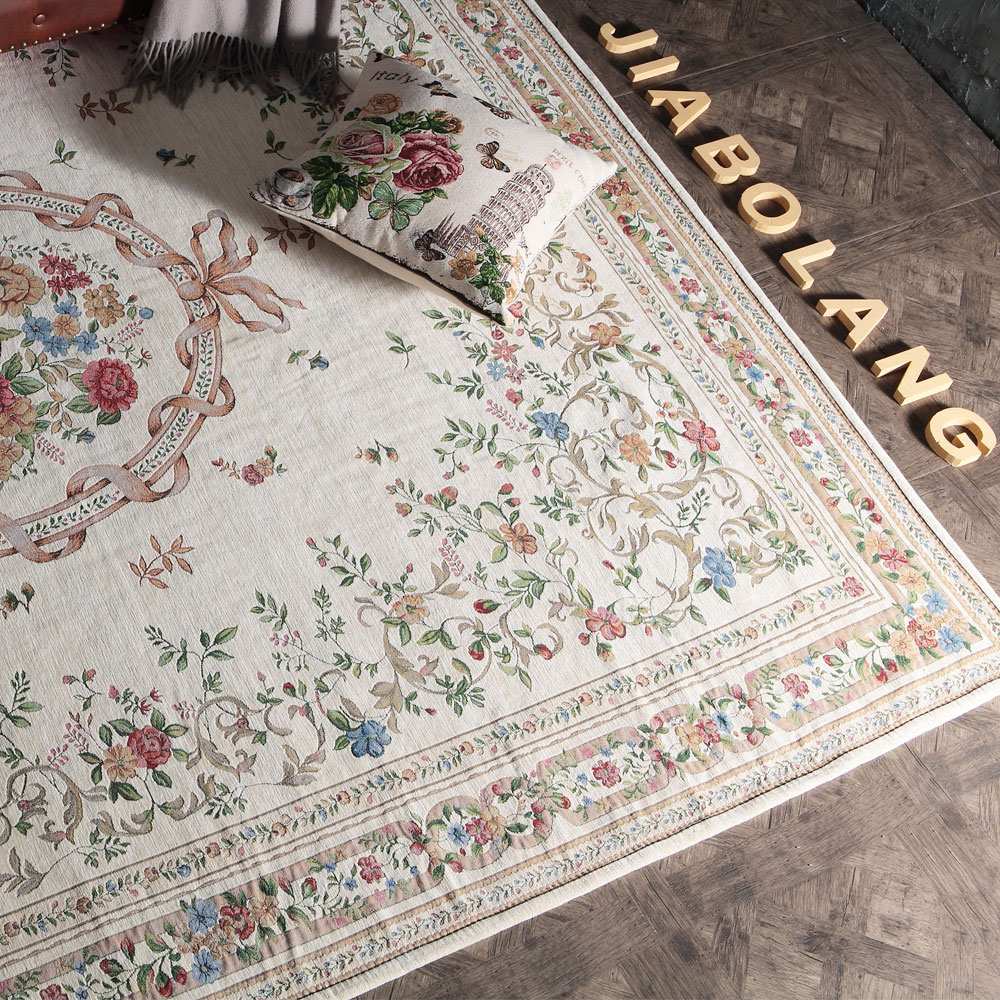
Retain “Single Yarn” and “Double Yarn” as the supplier’s original terms until the supplier explains what they describe for the exact carpet. Jiabolang lists Carpet 048 as Polyester [Single Yarn], while Carpet 029 and Carpet 059 use Polyester [Double Yarn]. Those entries do not establish fibre percentages, backing composition, a ply count or a performance ranking. A useful RFQ asks for the meaning, applicable component and supporting product reference instead of translating the words into an unverified technical promise.
Copy the exact entry with its product code
Begin with the wording on the Flower Pattern Carpet 048 page and retain the full code, including its leading zero. Record the material entry as published in a source column. Put the buyer’s requested clarification in a separate column so that the supplier’s words remain distinguishable from the buyer’s interpretation.
Give Carpet 029 and Carpet 059 their own records. The same phrase appearing on two pages is useful information, but it does not establish that every other construction detail matches. Keep the particular product reference with each answer rather than copying one response across a whole decorative carpet category.
• Original product-specific supplier wording.
• Supplier explanation of the term and applicable component.
• Separate unanswered fields for composition and construction.
Ask what Single and Double refer to
Ask the supplier to explain the terminology it uses in the offered specification. The response should name the feature or component being described and identify any supporting product document. Do not silently convert Double Yarn into a confirmed two-ply specification, two layers, a doubled finished weight or another unstated construction.
Keep the explanation in the supplier’s own terms, then request clarification if the buyer’s specification uses different terminology. A clear purchasing record should show how the terms correspond for this item. It should not create a technical equivalence merely because two phrases sound similar in translation.
Record field
Supplier clarification needed
Do not turn into
Published wording
What does the exact term describe?
An assumed ply or layer count
Component scope
Which part of this carpet carries the description?
The composition of the whole finished item
Composition detail
What product-specific declaration is available?
A percentage inferred from the word polyester
Required property
What separate evidence supports the requested claim?
A ranking inferred from Single versus Double
Keep the face and backing fields separate
A front catalogue view shows the decorative face. It does not expose every material in the finished carpet or establish the backing composition. If the purchasing specification needs those details, request a component-level declaration that identifies the scope of the answer and the exact offered version.
Leave backing, edge treatment and other unanswered construction fields open rather than copying the face description into all of them. The word polyester in a product attribute line should not be expanded into a complete percentage statement about every component. Ask which declaration the supplier is actually making for the selected item.
Do not rank performance from the terminology
Single and Double are not a substitute for evidence about a property the buyer needs. Do not describe one listed carpet as stronger, thicker, longer-lasting or more suitable for a particular setting solely because of that wording. A catalogue picture also cannot establish abrasion, slip, cleaning or fire-related results.
State a required property as a separate request and ask what model-specific information is available for the responsible review. Receiving a material explanation is different from accepting a performance claim. Retain those decisions separately so a terminology clarification cannot accidentally approve an unsupported retail statement.
Make a comparison that preserves unknown fields
Place the original entries, supplier explanations and unresolved fields side by side for the shortlisted models. Use the same field names but retain differences in what has actually been answered. An empty field is not proof that a component is absent or that it matches another model’s construction.
If a supplier proposes an alternative, keep the alternative code on its own line and ask which original request it addresses. The proposed substitute should not overwrite the selected carpet’s declaration. This allows the buyer to compare the actual response while keeping the original specification and its evidence traceable.
Link sample observations to the declaration revision
When a sample is received, record the sample identity and the supplier declaration it is meant to represent. Keep observations of visible appearance distinct from the wording of a material declaration. A photograph of a sample is not an independent fibre analysis or proof of an unobserved backing component.
If a label or accompanying document differs from the accepted description, retain the discrepancy and ask for an explanation. Do not quietly replace the earlier wording with the latest document without showing the reason for the change. The record should identify which statement is current and which question remains open.
Use only the confirmed scope in downstream descriptions
After the supplier has explained the term, retain the accepted description with the offered product and document revision. Where a buyer-facing description is needed, keep it within the confirmed scope. Do not add an unsupported fibre percentage, country-of-origin statement, certification or operating benefit to make the wording more attractive.
Send the original entries and open terminology questions through Jiabolang contact. The carpet blog can provide other purchasing context, but the item-specific reply should govern this record. Price, current availability, minimum quantities and timing remain separate commercial questions rather than consequences of a yarn label.
Frequently asked questions
Does Double Yarn mean twice the finished thickness?
The published term does not establish that. Ask the supplier to explain its exact meaning for the selected carpet and keep thickness as a separate specification.
Can Polyester Single Yarn be expanded into a whole-carpet fibre percentage?
No. Request the product-specific composition scope and any required details. Do not infer percentages or backing materials from the short attribute line.
Do Carpet 029 and Carpet 059 have identical specifications because both say Double Yarn?
Not automatically. Keep their product codes and declarations separate, and request confirmation of the fields that matter to the actual purchase.
Does an explanation of yarn terminology establish performance?
No. Any required property and supporting evidence need their own model-specific review.
Product and contact references
https://jblcarpets.com/product/flower-pattern-carpet-048/
https://jblcarpets.com/contact/
https://jblcarpets.com/blog/