
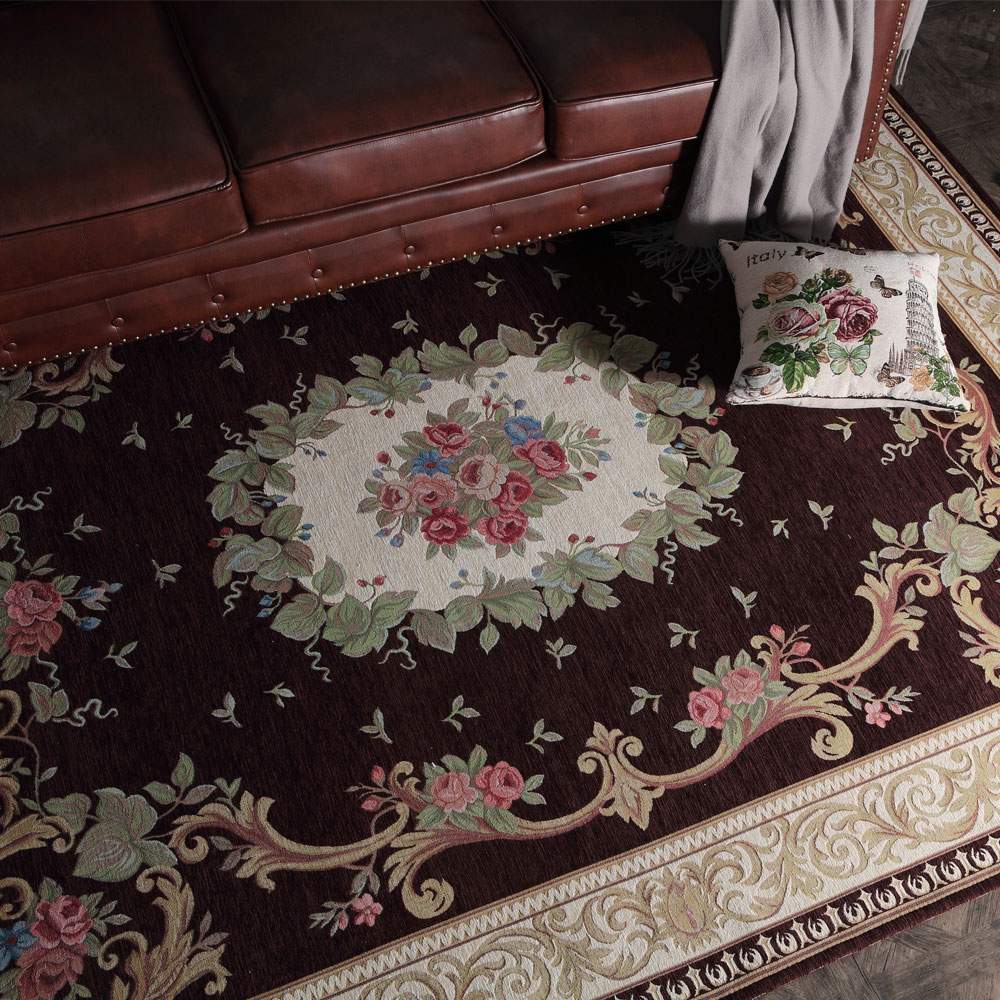
Request carpet packing figures with a named packed object and level beside every number. Finished rug dimensions, a single-item package, an outer bundle or carton, and any higher grouping are different records. Jiabolang’s product pages list finished-size options, but the reviewed entries do not establish the packing configuration. Ask the supplier to describe its proposed arrangement and provide the corresponding quantity, dimensions and weight basis. Do not derive shipping-pack data from the visible floor area or the catalogue room scene.
Anchor the response to one product and size
Use the complete Flower Pattern Carpet 059 reference and the requested finished size as the first fields. Preserve the leading zero in the product code. A response labelled floral carpet packing can be ambiguous when an order contains several designs and dimensions.
Give Carpet 029 and Carpet 048 separate response lines if they are included in the enquiry. Do not copy a packing answer across models or sizes simply because their photographs share a floral theme. Keep a buyer-requested packing arrangement distinguishable from the supplier’s actual proposed arrangement.
• Product code and requested finished size.
• Packed object, method and packing level.
• Quantity and measurement basis for each response.
Name the physical object behind each figure
Ask whether a reported dimension describes one finished rug, one wrapped item, a grouped bundle, a carton or another proposed object. Use the supplier’s description and retain it alongside the number. If a packing level is not used, the supplier can state that instead of leaving the buyer to infer its existence.
Likewise, record the unit attached to a quantity. One piece, one individually packed rug and one outer package should not share an unexplained count column. A table can look complete while still hiding this distinction, so ask what each object actually contains before comparing figures.
Record level
What the response should identify
Keep separate
Finished product
Exact carpet code and finished size
Packed object dimensions
Single-item pack
One identified item and proposed method
A multi-item group
Outer pack or group
Contained items and their count basis
The number of unlabelled pieces
Higher grouping, if offered
Actual grouped objects and basis
An assumed pallet or standard carton
Ask for the proposed method without inventing it
If the buyer needs the supplier to describe whether the item is rolled, folded or packed in another way, ask that as an explicit question. None of those methods is confirmed by the catalogue scene. A different finished and packed dimension would not, by itself, explain which method was used.
Record the proposed method in the supplier’s response and ask whether it applies to the selected product and size. If a different method is offered as an alternative, retain it on its own line. Do not describe one option as standard, protective or suitable for a particular shipping route without the necessary confirmation.
Keep dimensions, weights and counts tied to the same level
Request the units and named measurement directions for the actual packed object. Preserve the original supplier figures as supplied. If the receiving or logistics worksheet uses a different convention, show the interpretation separately so that the source response is not lost.
Ask what a stated weight includes and which packing level it describes. A product weight, packed-item weight and outer-package gross figure should retain their own labels. Do not calculate an assumed package count by dividing one weight by another when the contents and weight basis have not been confirmed.
Request a labelled packing reference where needed
A packing photograph or diagram can help identify the object behind the response, but it needs a product, size and packing reference. Ask the supplier to show the actual proposed arrangement relevant to the enquiry. A cropped room scene or a generic warehouse photograph is not evidence of that configuration.
Keep the evidence’s scope visible. A photograph of one sample pack can document the presented arrangement without proving every future consignment’s contents or condition. If the buyer needs a receiving check, link it to the agreed specification and identify which fields require an actual observation at receipt.
Reconcile the packing schedule before using logistics figures
Compare the product-and-size order lines with the supplier’s packing schedule. Ask whether each order quantity and packed group can be traced to the same unit definition. Preserve any mixed-size or mixed-design proposal as a separate configuration rather than assuming that a catalogue assortment is packed together.
Give unresolved lines a clear state and retain the supplier’s clarification beside them. Downstream logistics estimates should use the confirmed information appropriate to that purpose. This article does not establish a freight charge, a final shipping arrangement or a guaranteed protection result.
Retain changes between sample and bulk proposals
If the proposed packaging changes after the sample discussion, ask which dimensions, weights, counts and evidence references are affected. Keep the earlier version with the reason for the change. A revised packing photograph should not silently inherit measurements recorded for another configuration.
Send the level-by-level worksheet through Jiabolang contact and retain the carpet blog for related purchasing background. The completed response should make each packed object understandable and traceable. Material, current stock, minimum quantity, price and delivery commitments still need their own supplier confirmations.
Frequently asked questions
Can finished rug dimensions be used as shipping-pack dimensions?
No. Request figures for the actual packed object and its proposed configuration. The finished footprint is a different record.
Should the buyer assume the carpet is rolled?
No. Ask the supplier to identify the proposed method for the exact product and size. The catalogue scene does not establish it.
Can a weight ratio determine the number of rugs in an outer pack?
Not without confirmed contents and weight bases. Ask for the actual quantity and unit definition rather than deriving an assumed count.
Does a sample packing photograph prove future shipments match?
It documents the presented arrangement within its stated scope. Retain the agreed packing record and the relevant receiving checks separately.
Product and contact references
https://jblcarpets.com/product/flower-pattern-carpet-059/
https://jblcarpets.com/contact/
https://jblcarpets.com/blog/